
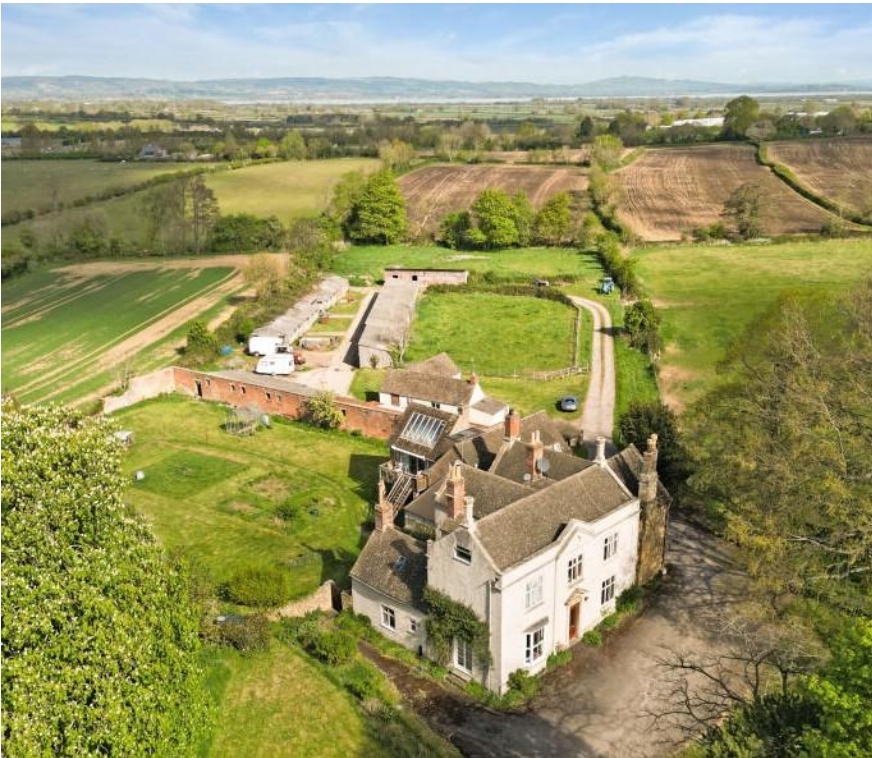
Why I’m writing this
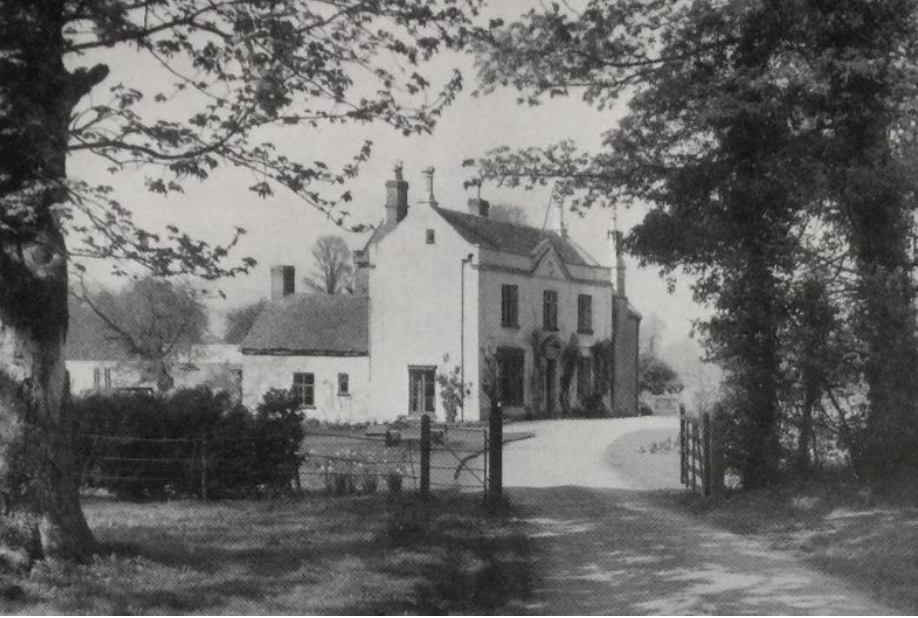
I’d often wondered about the large house tucked away at the bottom of Taits Hill. Then Andrew Weight from Suffolk happened to contact me because he was researching his family history, including the Weights of Clingre. The Weights built the original house and lived at Clingre for over 200 years. Once we had found out about them, I was hooked and wanted to know who came next.
Introducing Reverend AWC Hallen
In 1885, Rev. Arthur Washington Cornelius Hallen wrote An Account of the Family of Hallen or Holland from 1280 to 1885. It included a family tree and information on his mother’s family. Her maiden name was Weight and her family lived at Clingre House. Andrew Weight has an original copy of the book, which came from Clackmannanshire Library.
He assures me that he didn’t steal it! Rev. Hallen ended up at Alloa in Clackmannanshire so it’s possible that he donated this very book. Rev. Hallen also wrote a later article about the Weights of Clingre in Vol. 6 of Gloucestershire
Notes & Queries.
https://archive.org/details/gloucestershire05unkngoog/page/n59/mode/2up?q=Weights
A forgotten family vault?
Before we visit Clingre House, let’s look for the Weights at St Cyr’s church. Rev. Hallen’s mother, Mary Elizabeth Hallen née Weight, was buried on the south side of the churchyard in 1864.
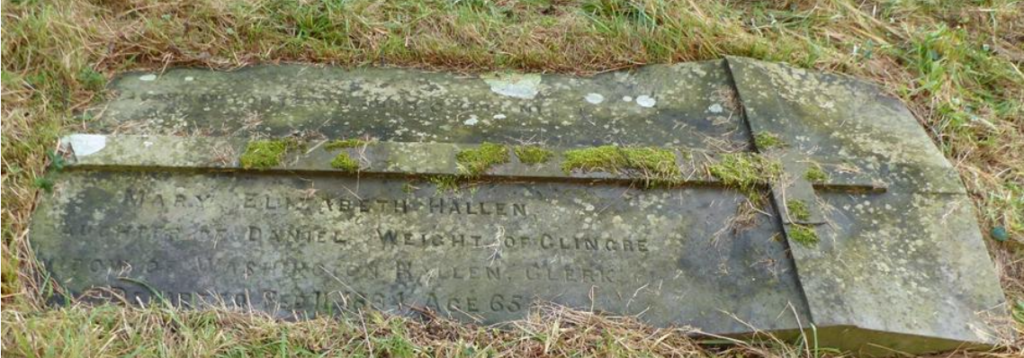
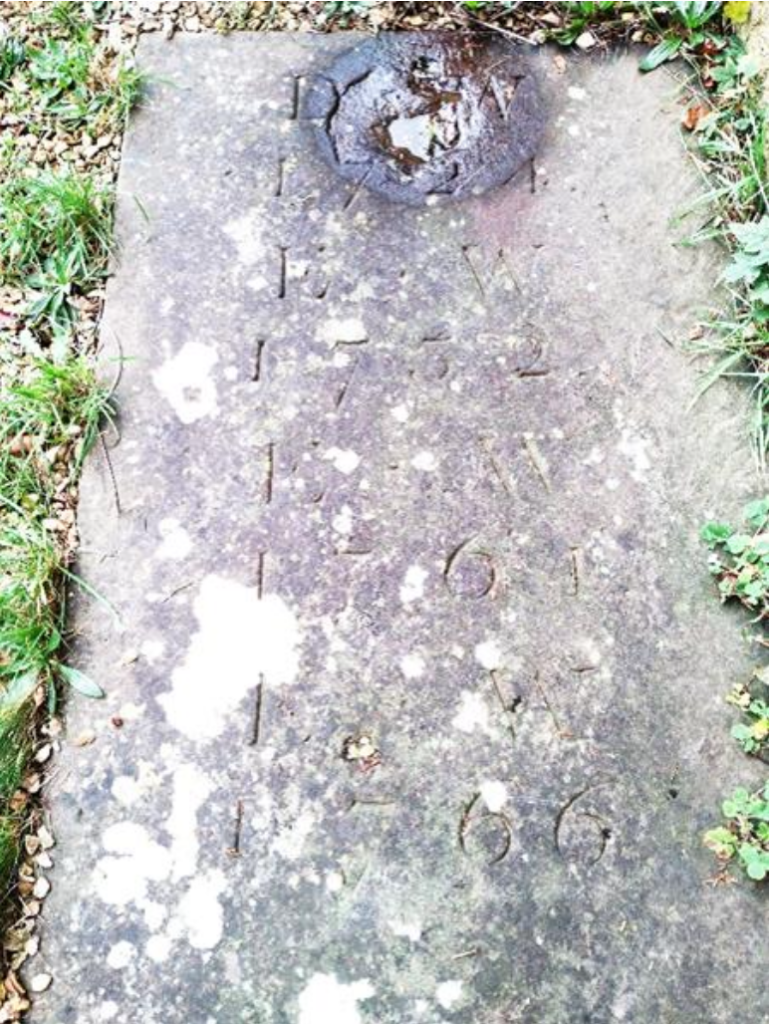
Nearby, next to the wall of the south aisle are two large slabs, one of which is pictured below. These bear the initials and years of death of earlier Weights. Unusually, they have the remnants of metal fixtures, which makes me wonder if they were designed to be lifted. Could they cover a family vault?
We know from his own account that some relocation of human remains was necessary when the architect John Loughborough Pearson rebuilt the church in the mid-1850s. In particular, the addition the south aisle could have required the demolition of some existing monuments.
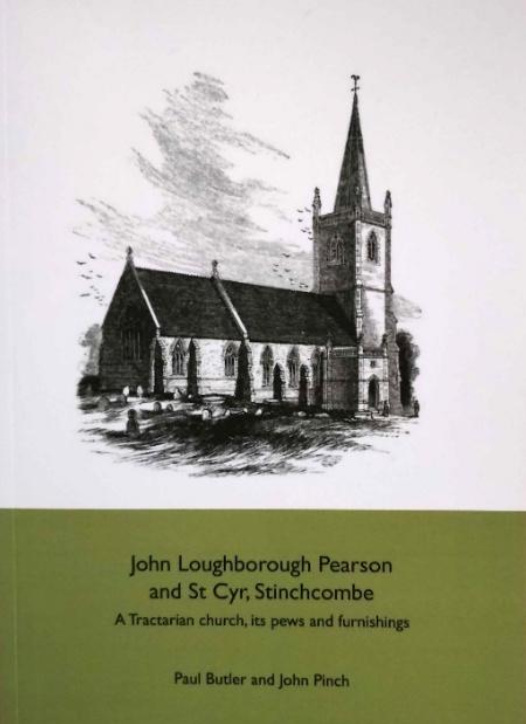
You can learn more about Pearson and his work at St Cyr’s in Paul Butler and John Pinch’s booklet, which is on sale at the church.
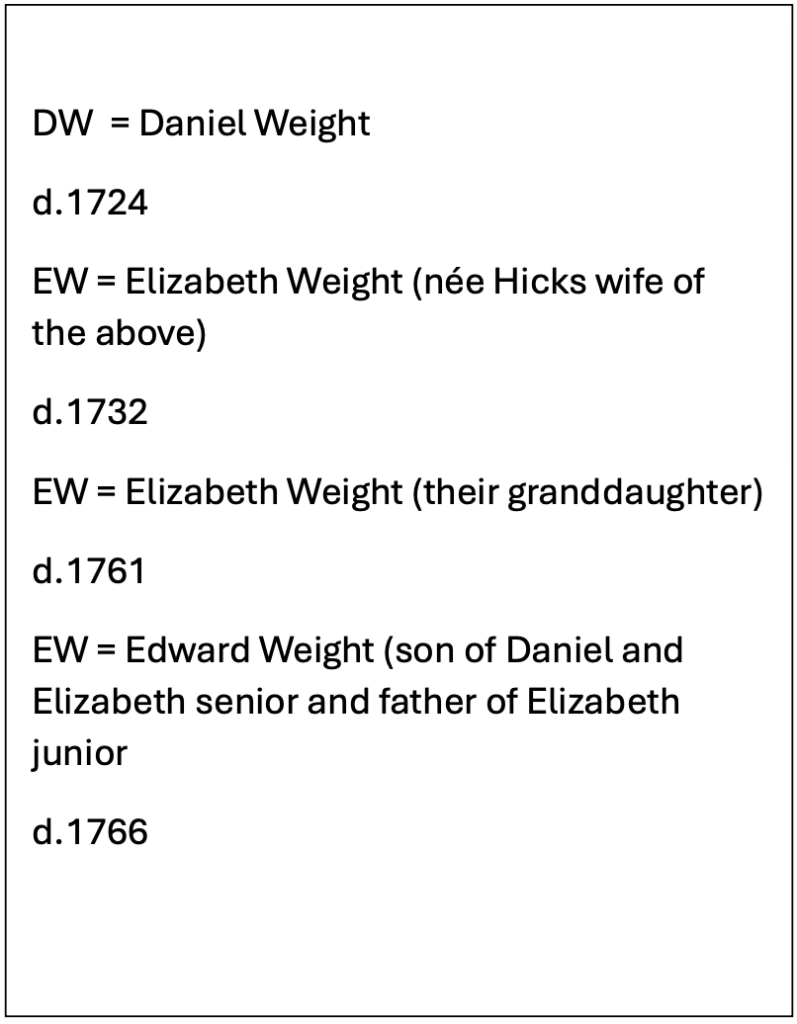
It is certain that at least one Weight family monument used to exist. Bigland https://archive.org/details/historicalmonume0005bigl mentions a memorial to Edward Weight who died in 1766 and his daughter, Elizabeth, who died 5 years earlier. These are two of the people whose initials and years of death appear in the photo above. Bigland records the inscription as:
EDWARD WEIGHT of the Parish of Cam, Son of DANIEL and ELIZABETH WEIGHT, who departed this Life, the 6, of Febr, 1766, aged 78 years,
Also ELIZABETH, the daughter of EDWARD WEIGHT, aforesaid who died 2, [ ] 1761, aged 17 years
This monument no longer exists. Neither is there any monument in the churchyard to later Weights known to have been interred at St Cyr’s. They include Daniel d.1805, his wife Elizabeth d.1848, their son Edward d.1857 and his wife Elinor Clara d.1841.
These were prominent members of the community, who might be expected to have impressive gravestones or tombs. My theory is that a Weight vault marked by the two slabs already mentioned was created during the rebuilding of the church and the remains of previously buried Weights were moved. I believe that Edward Weight who died in 1857, shortly after the church was completed, would also have been interred in the vault. Edward and Elinor’s children moved away from the area so this would have been the last time the vault was opened.
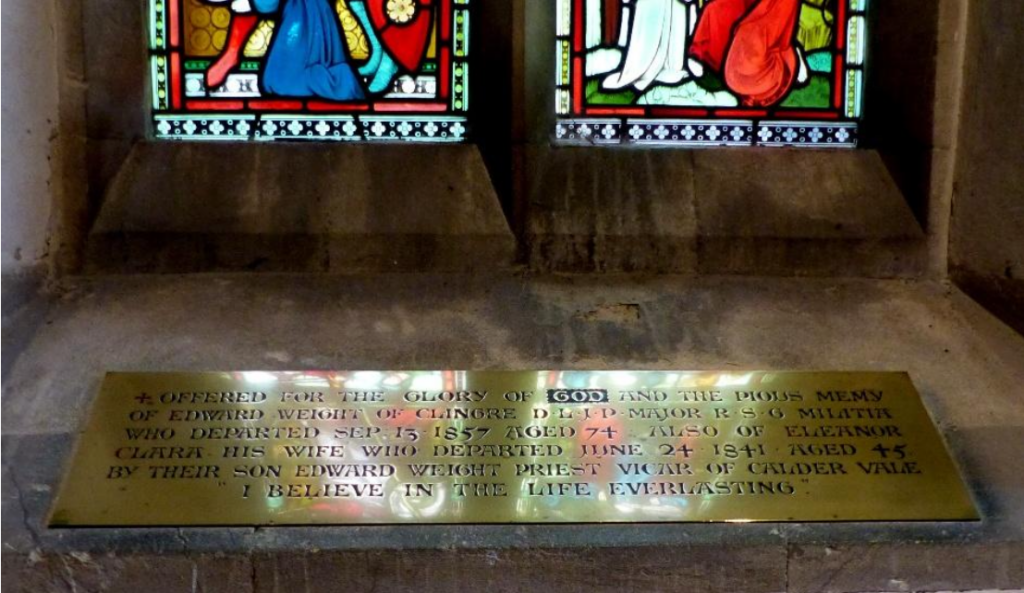
Inside the church, very close by, there are stained glass windows and brass plaques dedicated to Edward and his wife Elinor Clara and to Edward’s mother, Elizabeth.
Robert Waight (c.1594 – 1643)
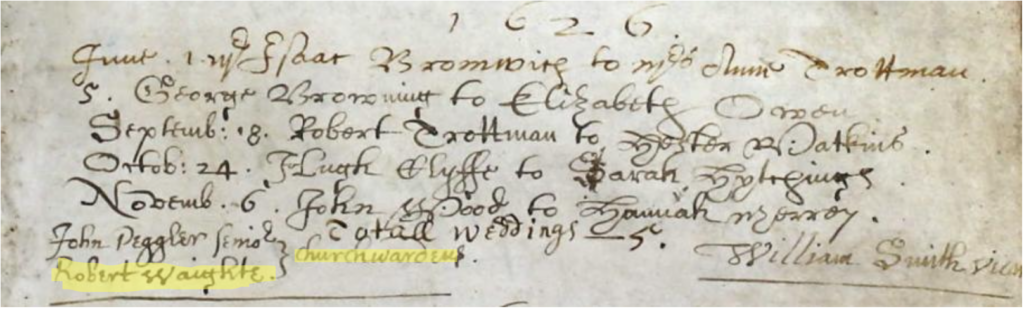
Now to Clingre House and Robert Waight who built the original dwelling there. He was a local man, already based in the Clingre/Cam/Stinchcombe area. Cam parish records show that he was acting as a churchwarden in Cam back in 1626.
In 1639, John Thayer of Stinchcombe granted Robert a 99-year lease on 3 acres of meadow or pasture called Waynelotts and 1 acre at a place called Newent. The annual rent was three pounds five shillings and eight pence. All the land was in the parish of Stinchcombe. Waynelotts is the area where Clingre House is located. Newent was the old name for an area near the quarry at the top of Taits Hill Road.
The lease includes a condition that Robert builds a two-room house at Waynelotts within 12 months. The land at Newent may have been included so that he had a source of stone to build the house.
Robert is described as a husbandman, which is a small-scale farmer one step down from a yeoman like John Thayer. We know that he was illiterate because he ‘made his mark’ rather than signing the lease.
He was already married to Ann Parker when he acquired the land. The marriage probably took place in 1630 because Hallen says they had a fireback inscribed RW and AW 1630. It was likely a second marriage for Robert because a grandson appears to be mentioned in his will. The six children he had with Ann were all under the age of 13 when Robert died around 1643.
Living through the English Civil War
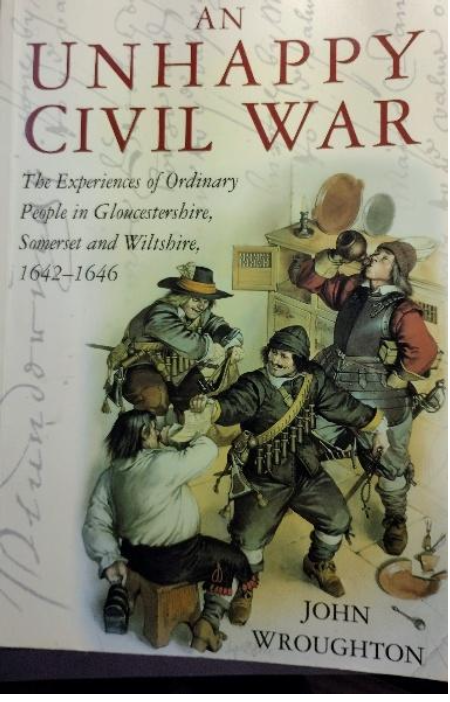
As well as having a young family to raise, the widowed Ann had to cope with the effects of the English Civil War. John Wroughton’s book An Unhappy Civil War describes the experiences of the ordinary people of Gloucestershire, Somerset and Wiltshire. They had been suffering food shortages and a general depression since 1620, leaving them ill-equipped to cope with what was to come.
Villages in the Berkeley Hundred were ordered to contribute to the costs of the Royalist garrison at Berkeley Castle. Cloth, wool and yarn were ‘requisitioned’ from clothiers to make Royalist uniforms.
Only the rich could afford to buy protection orders or pay bribes so communities resorted to vigilante tactics. The Governor of Berkeley Castle reported to Prince Rupert that his foot soldiers could not obtain supplies due to resistance by armed locals. Even a troop of cavalry was set upon, with the loss of six men. Samuel Rudder, writing over 130 years later, relates that Melksham Court (INTERNAL LINK) and Piers Court were burnt down by Royalist soldiers.
Unsurprisingly, there are many gaps in parish records during the Civil War period. We do not know whether Ann remarried or when she died. Nor is it certain which of her children inherited the house.
Robert’s House
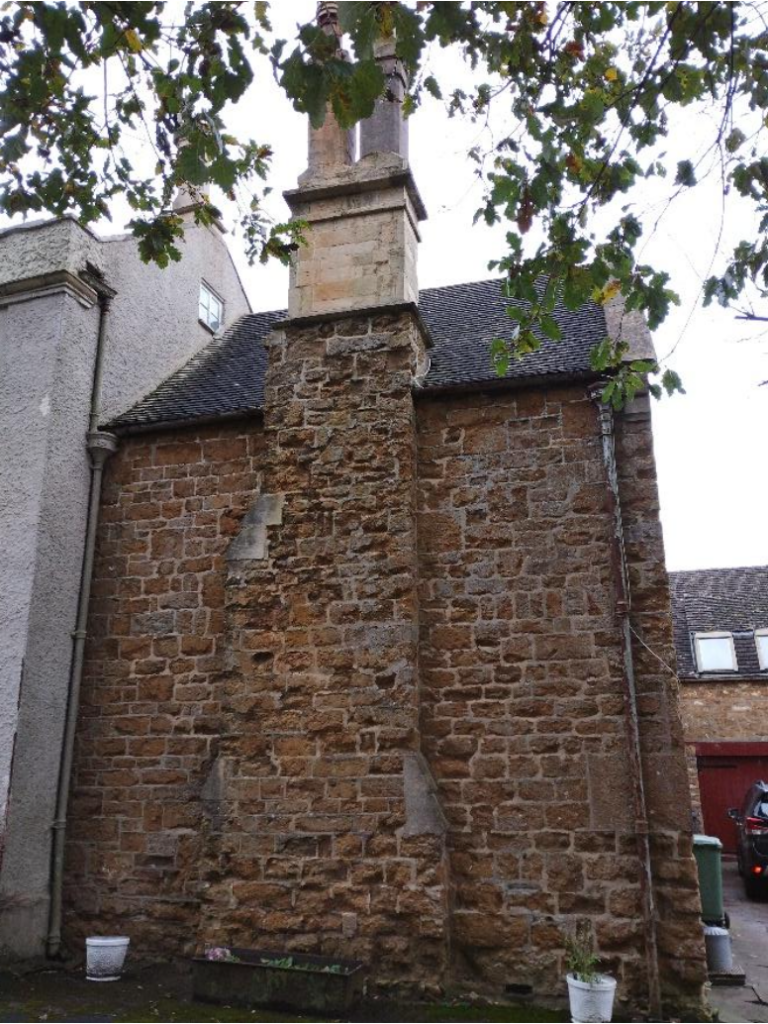
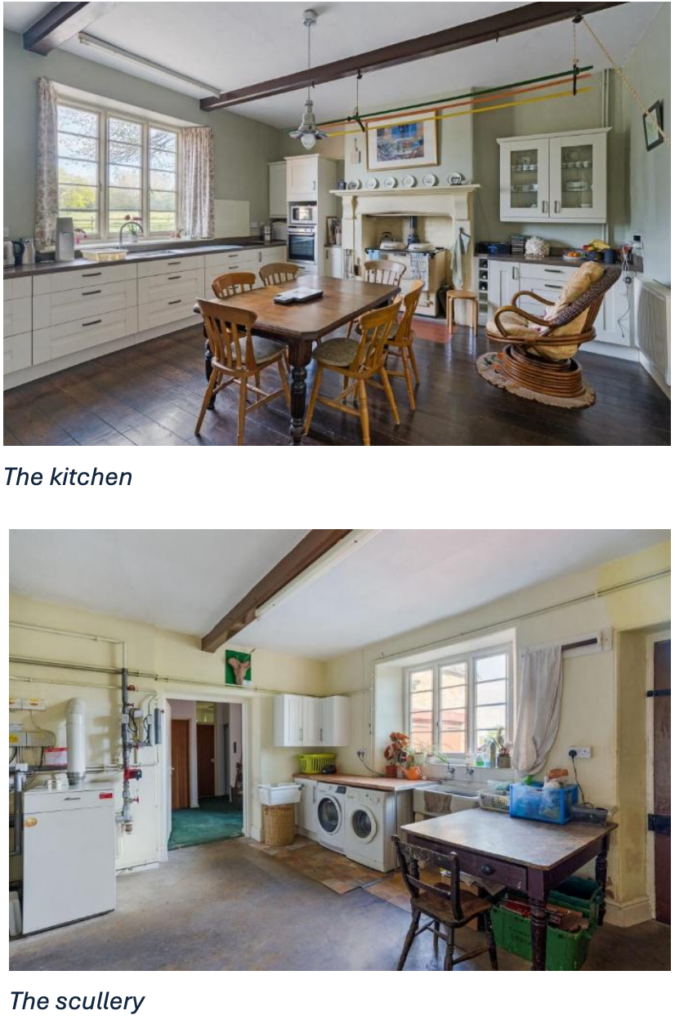
When Andrew Weight and I visited Clingre House, we were amazed to see a weathered marlstone part not visible from the road This is almost certainly the two-room house that Robert built, with later modifications. Downstairs it contains the kitchen at one end and the scullery at the other.
It is possible that the scullery may have started out as a byre for animals. Above there are two bedrooms, however, the first floor may not have been present originally. Sadly, there was no sign of the fireback with Robert and Ann’s initials, as mentioned by Rev. Hallen.
Daniel and Edward Weight
Robert and Ann’s son Edward remained in Clingre, possibly living in the house built by his father. He appears in the Cam parish records as Supervisor (1669 and 1675) and as Tithingman (1671). The Supervisor ensured that the public roads, bridges and footpaths in the parish were maintained. The Tithingman was responsible for keeping law and order in the parish. Both roles were unpaid and lasted for one year. Edward died before 1700 and his two daughters died without marrying.
Another son, Daniel, probably lived in North Nibley from where both his first and his second wife originated. It was Daniel’s grandson, also called Daniel, who eventually inherited the house at Waynelotts.
Daniel Weight (1663 – 1724)
Daniel married Elizabeth Hicks, the sister of William Hicks who lived at Old Clingre Farm (INTERNAL LINK). His will, dated 1724, mentions his son Edward and six daughters. He leaves the house and orchard at Wainlott’s Green to his wife for the rest of her natural life. After her death, Wainlotts and Hengaston (further down towards the A38) and his other copyhold land passed to Edward. Copyhold was a form of inherited tenancy recorded in manorial court records.
The St Cyr’s burial record calls this man Daniel Wait of Clyngre. His only surviving memorial in the churchyard is one of the large slabs already mentioned.
Edward Weight (c.1688 – 1766)
Edward did not marry until he was about 52 years old. He and his much younger bride, Mary Organ, tied the knot in October 1740. The wedding took place in Yate although they both lived in Cam parish. The following February their first child was baptised and buried a day later. Mary went on to produce two healthy sons, Daniel in 1742 and Edward in 1746. A daughter, Elizabeth, died as a teenager in 1761.
References to land deals contained in Fragmenta Genealogica Vol. 5 by Frederick Arthur Crisp https://archive.org/details/fragmentagenealo05cris_1/page/n9/mode/2up
make it clear that Edward owned houses, cottages and land away from Clingre. The places mentioned include Wick, Horsley and Tetbury.
Mary survived her husband by over 20 years. Hallen says that she died in 1787 at Gossington Hall near Slimbridge. It is not known whether she was the tenant or there in some other capacity.
Daniel Weight (1742 – 1805)
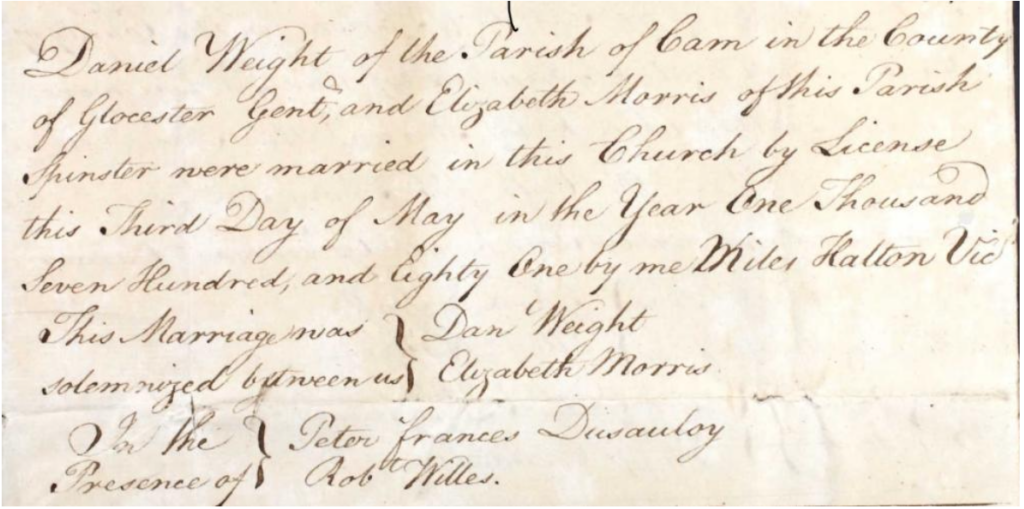
Daniel married Elizabeth Morris of Southampton in 1781. The wedding took place at fashionable Holyrood Church in the centre of town. Elizabeth was a spinster resident in the parish. The two witnesses were local men who had no obvious connection to the bride or groom.
Daniel’s connections with Southampton may have involved business or pleasure or both. It was a fashionable spa and sea-bathing resort popular with the Royal Family. Additionally, it was a victualling centre for the Royal Navy, including the supply of beer. Daniel was almost certainly in the malt business. His brother-in-law, William Hicks, who died in 1742 had been a maltster in Stinchcombe. Under the terms of Williams Hicks’ will Daniel was required to manage his lands and use the income to support his widow and seven daughters. A large malthouse was built at one of the houses owned by the Hicks in the 1760s (INTERNAL LINK TO THE MALT HOUSE HISTORY).
Richard Chidlaw has provided an intriguing snippet from his research in the Berkeley Castle Muniments Room. Around 1790, Daniel removed the Cam Parish Book, where all the parish records were written. Lord Berkeley was very annoyed and eventually managed to retrieve it and put it in the Muniments Room. It is not known how or why Daniel acquired the book.
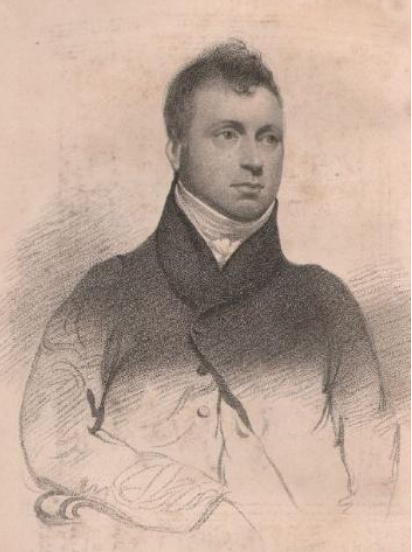
Thomas Dudley Fosbrooke, then a curate at Horsley, published a history of Gloucestershire in 1807. Volume 1
https://books.google.je/books?id=CQUVAAAAQAAJ&printsec=frontcover#v=onepage&q&f=false
mentions “Dan” Weight, Esq who has a house and estate in the hamlet of Clingre, where he resides. (By the time of publication Dan was recently deceased.) Fosbroke notes that Dan also owns the Upper Clingre House estate, now a farmhouse, that Mr W. Hickes had acquired from the Tryes in 1736. This farmhouse would be what we now call Old Clingre Farmhouse and W. Hickes would be Dan’s brother-in-law, as already mentioned.
Edward Weight (1782 – 1857)
In 1806, Edward’s widowed mother assigned to him the lease of 4 acres of pasture in Hengaston Field, 3 acres called Wainlott and a tenement (presumably Clingre House), for the remainder of a term of 2,000 years. She lived for many more years, dying at the age of 89 in 1848. As already mentioned, there is a stained-glass window at St Cyr’s dedicated to her.
Edward’s sister, Anna Maria, married Dursley solicitor John Vizard not long after their father’s death. Another daughter, Mary Elizabeth, become the second wife of the Rev. Washington Hallen in 1833. Their son was the Rev. AWC Hallen who wrote the book. As a widow, Mary Elizabeth lived at Sandpits and then at Redmarley D’Abitot in Worcestershire. She was buried at St Cyr’s near the Weight family slabs.
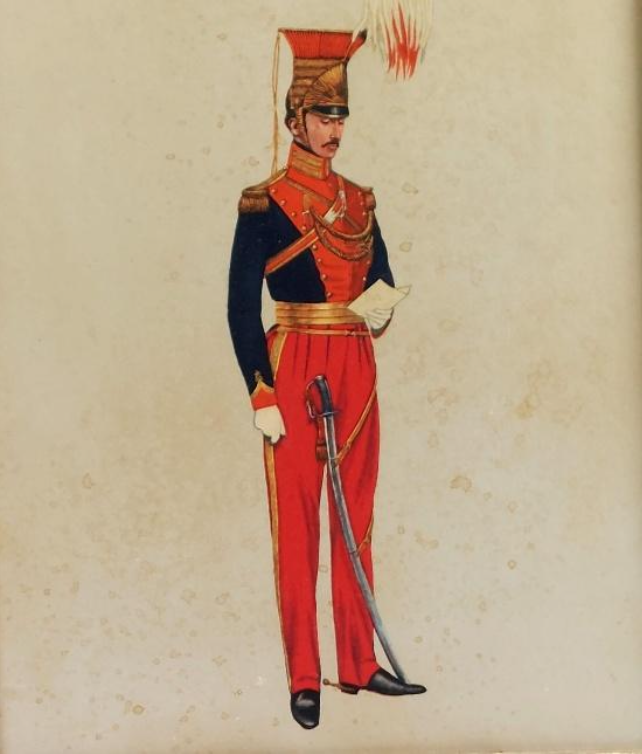
There is no information about Edward’s younger days.
The Napoleonic Wars took place during his 20s and early 30s so he may have done military service abroad. I can find no record of his marriage to (Elinor) Clara Davis. Given that their son Edward was born in Ireland in 1824, the marriage may also have taken place there.
One newspaper associates Edward with the 12th Lancers, a cavalry regiment that was stationed in Ireland 1820-5. Their daughter, Louisa, was born in Heavitree, Exeter in 1828. Edward was made a freeman of Gloucester by gift, meaning an honorary freeman, in 1826.
Edward lost his wife in 1840 and never remarried. In 1843, he became Major of the Royal South Gloucester Militia. Possibly not too onerous a role in a time of peace: the militia men were rarely assembled for training after the Battle of Waterloo in 1814.
Numerous newspaper articles between 1848 and 1856 refer to Edward’s work as a Justice of the Peace. This was an unpaid role that included acting as a judge in petty sessions, operating the Poor Law, fixing wages, licensing ale houses and overseeing weights and measures.
The Tithe Apportionments show that Edward owned land in Cam, Stinchcombe and Breadstone in 1839. He rented further land, mostly from Earl Fitzhardinge.
The details of an auction soon after Edward’s death show that his Clingre estate was being used mainly for dairy farming, including butter and cheese production. The mention of hogsheads suggests that they were producing their own cider and beer. A small book I Remember – The Day’s Work in Gloucestershire Villages 1850 – 1950, produced by Gloucestershire Community Council notes that most Stinchcombe farms brewed a little cider and beer. It notes that, throughout England, harvest beer was often included as part of a farm labourer’s wages until that was made illegal in 1887. After that time, free cider was provided instead, about a gallon a day for each man!
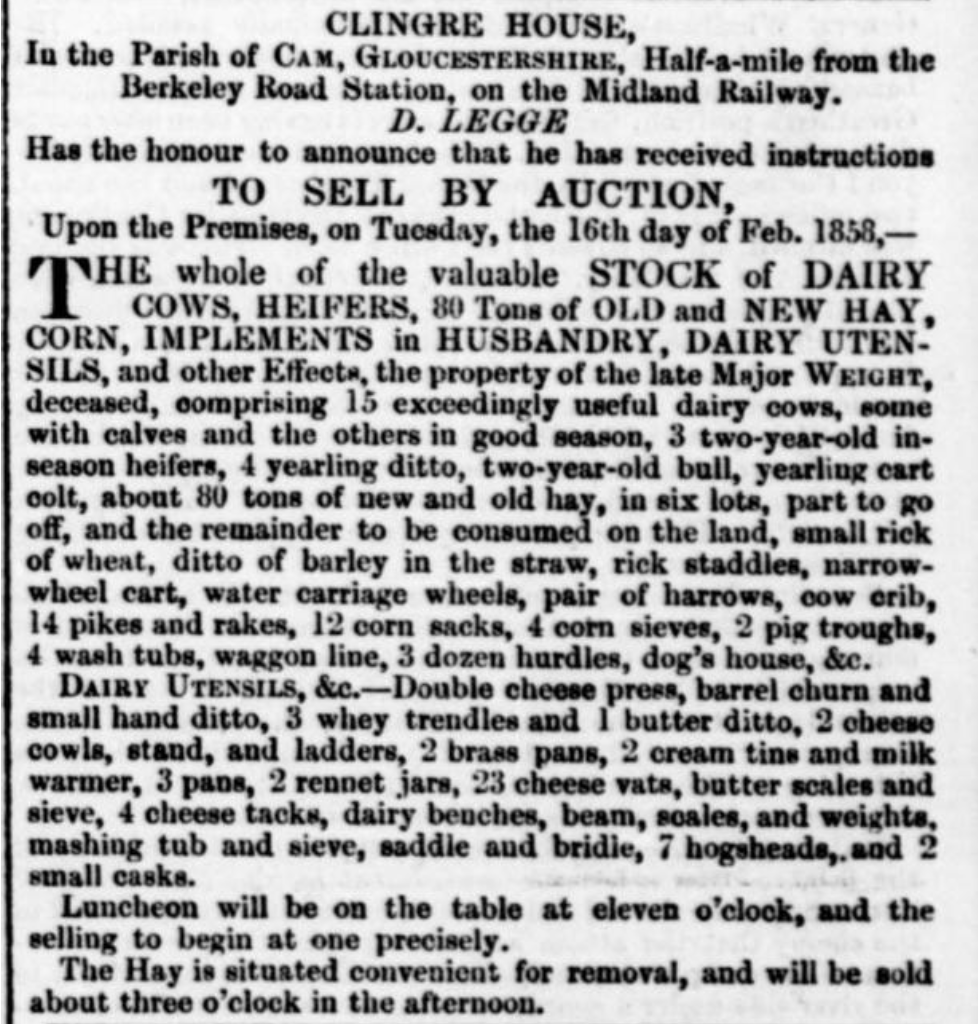
A retrospective article in Gloucestershire Notes & Queries 1901 is entitled “Cam Names of Note Sixty Years Ago”. It recalls that “Captain Weight lived in a very good house, now standing, with his wife, son and daughter; he was a County Magistrate and was Chairman of the Hopton Blue School Managers; his son became a clergyman”.
Who extended Clingre House?
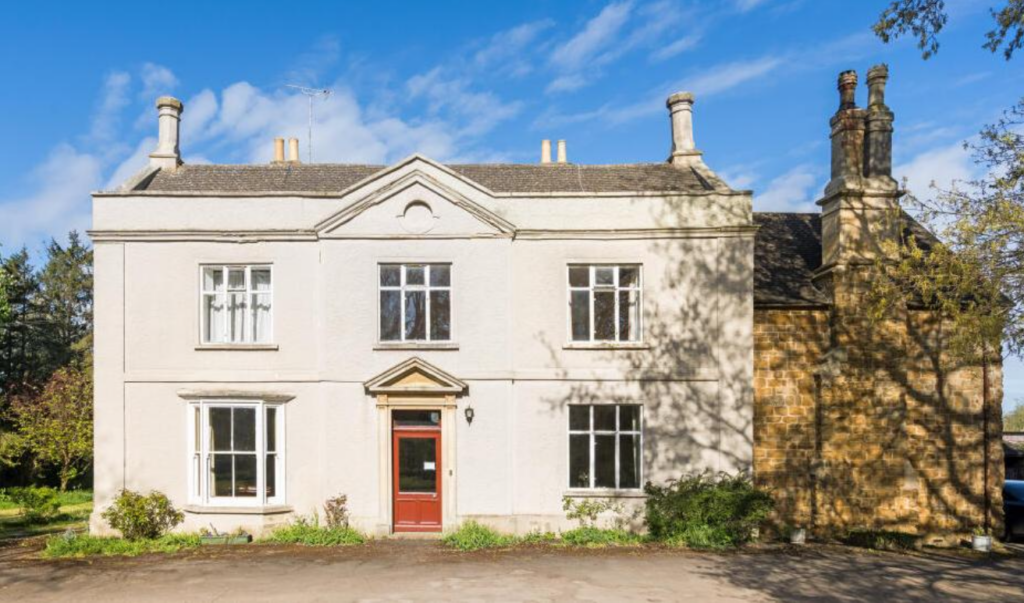
A 1946 sales brochure describes the house as Georgian, a period that lasted from 1714 to1837. As described above, three Weights owned the house in that timeframe. Who is the most likely to have added the dramatically different “extension”?
The fashion for pediments (triangular gables above the entrance) reached its peak by about 1760, while the first Edward was still alive. Around here they were still being built well into the 1760s, for example at Piers Court and Nibley House. It is by no means impossible that the next owner, Daniel, would have commissioned such a building after 1766, perhaps copying larger houses in the area. The likelihood of his son, the second Edward, choosing that style in the 1800s seems much less.
Another diagnostic feature is the so called ‘Chippendale Chinese’ staircase mentioned in the house’s listing. Thomas Chippendale’s The Gentleman and Cabinet Maker’s Director, first published in 1754, included four styles of Chinese railings that could be used in staircases. They bear little resemblance to the staircase at Clingre House. The less well known, William Halfpenny published Rural Architecture in the Chinese Taste a couple of years earlier. This includes a design for a ‘Chinese’ staircase. I know about it thanks to Margot Finn and Kate Smith’s The East India Company at Home, 1757-1857, which has a chapter about Chinese staircases in North-West Wales.
https://ucldigitalpress.co.uk/Book/Article/39/64/2884
All three Welsh staircases are closer to Halfpenny’s design than to any of the patterns suggested by Chippendale. The one at Trefeilir (black and white image below) is the simplest in design and the most similar to the one at Clingre House. The Trefeilir staircase, installed about 1760, is sturdier and more ornate than its Clingre counterpart. The proportions of the latter do not look quite right at the lower end because the angle of the banisteris isnso steep. Could an existing staircase perhaps have been given the Chinese treatment?
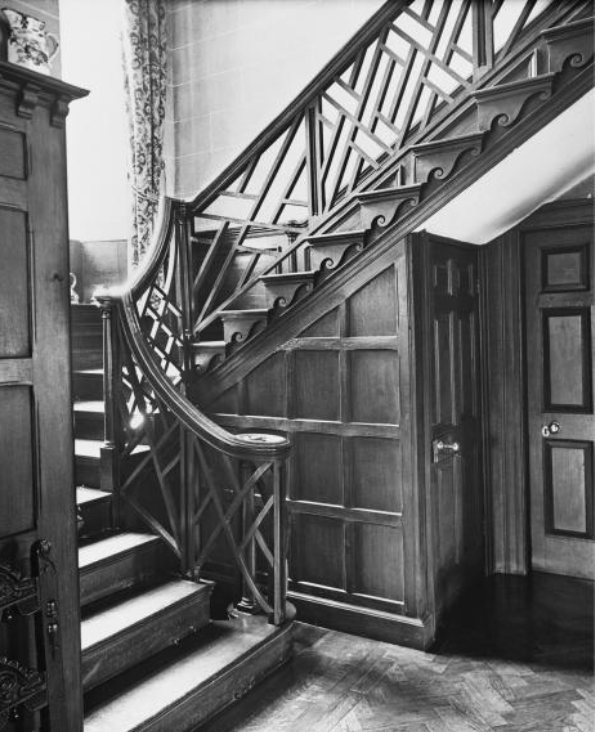
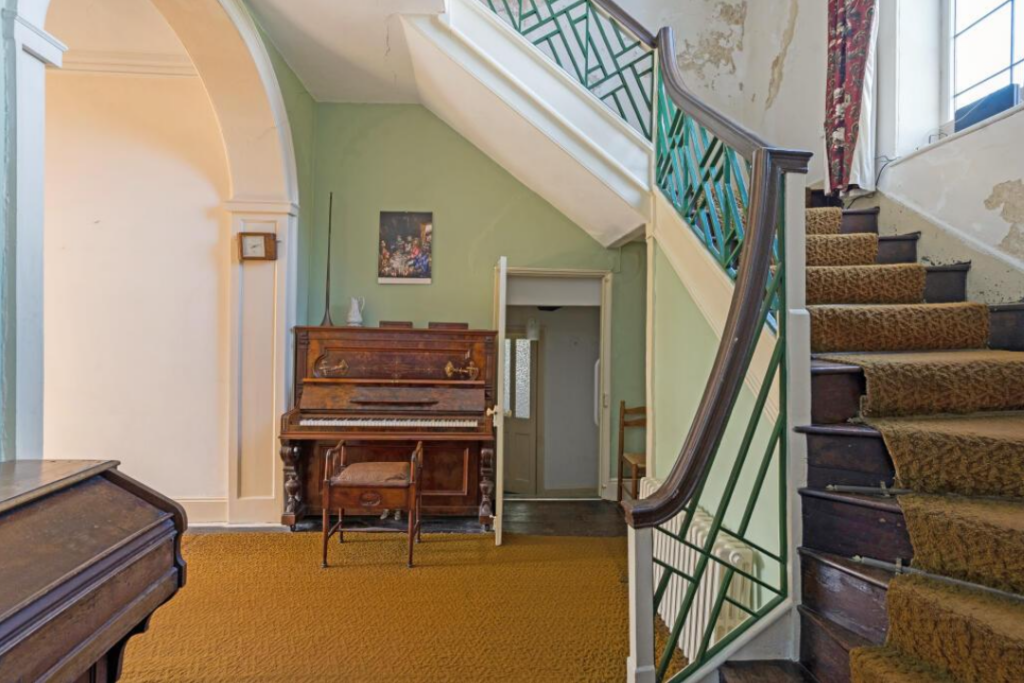
On balance, it seems to me that Daniel, inheriting the house in his mid-20s, is the most likely to have commissioned the Georgian house. I cannot imagine his father embarking on such amajor project in his final years. By the time Daniel’s son, Edward inherited, pediments and chinoiserie would seem rather old-fashioned. He is more likely to have been responsible for the early Victorian changes.
Victorian Remodelling
The listing for Clingre House states that it was remodelled around 1840, which would be during the second Edward’s time. Richard Chidlaw, whilst not claiming to be an architectural historian, suggests that the floorboards, beams, fireplaces, windows and room sizes in the main house seem consistent with the early Victorian period. The second Edward Weight was probably responsible for these changes.
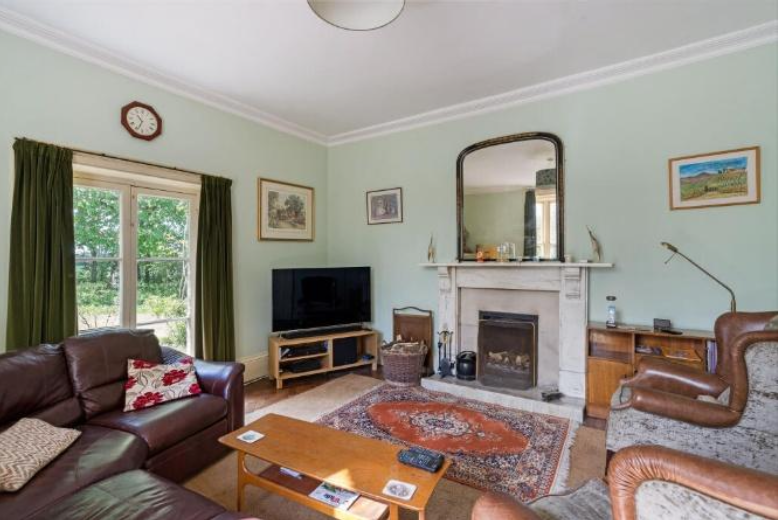
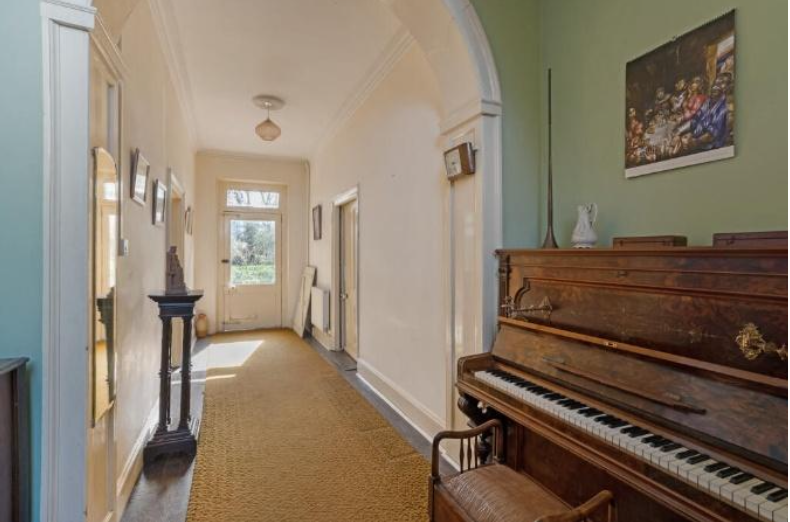
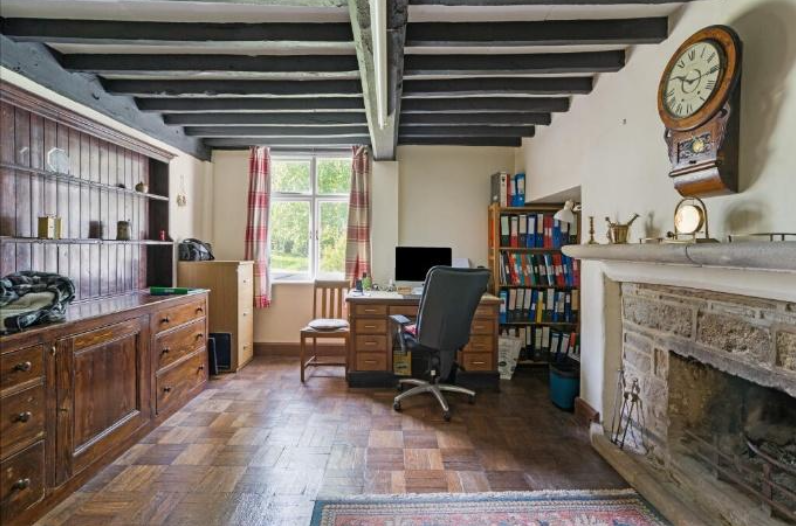
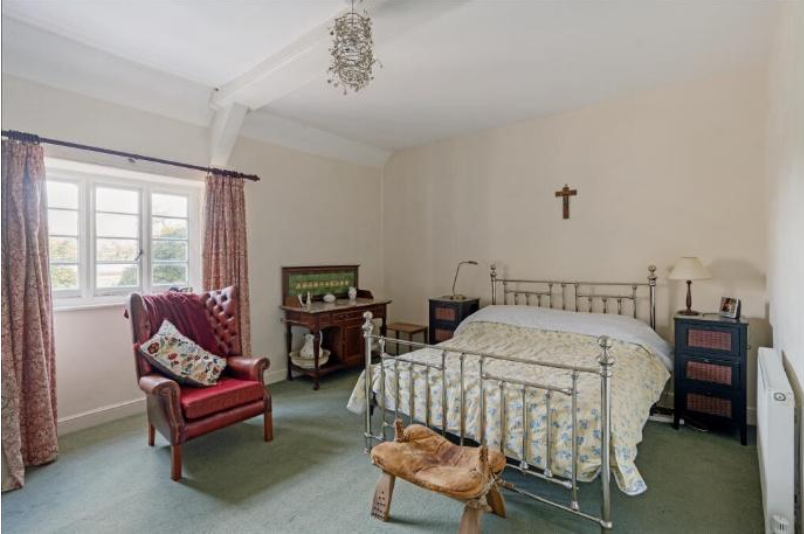
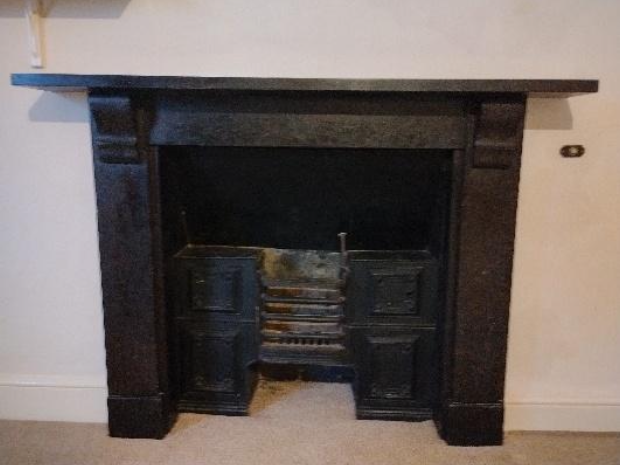
This fireplace in one of the bedrooms carries the brand name Mallory and Green of Cheltenham. The earliest mention I’ve found of these Cheltenham-based ironmongers is 1860s but they could go back further.
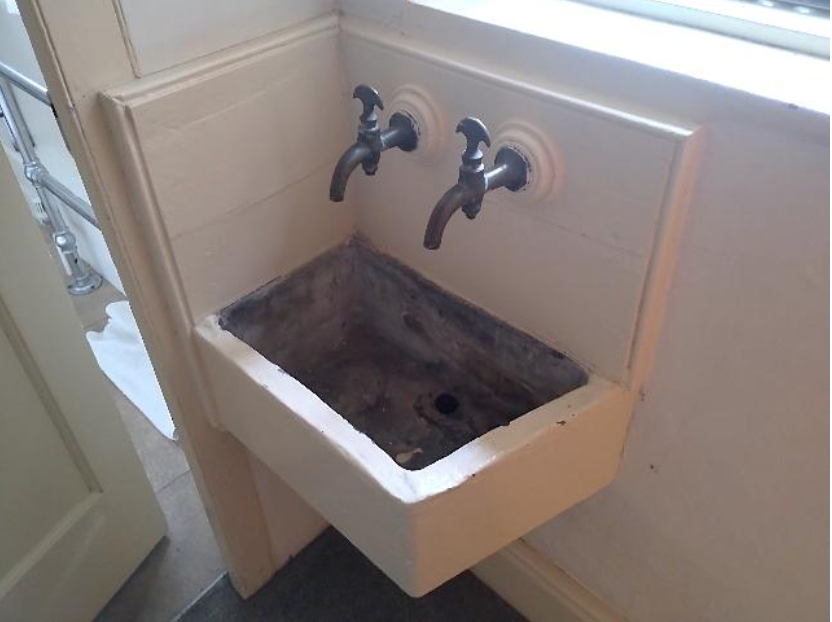
Another interesting feature is the small lead-lined sink on the first-floor landing. Its water supply came from a rainwater tank on the roof.
Lead was often used for lining sinks because it was soft and malleable and resistant to corrosion by water. It was also less likely to damage precious glass and china. In this location, I wonder if it was used to fill jugs of complexion-friendly rainwater for the family’s bedroom washstands.
The unusual tap handles closely resemble several post-medieval barrel taps on the Portable Antiquities Scheme database.
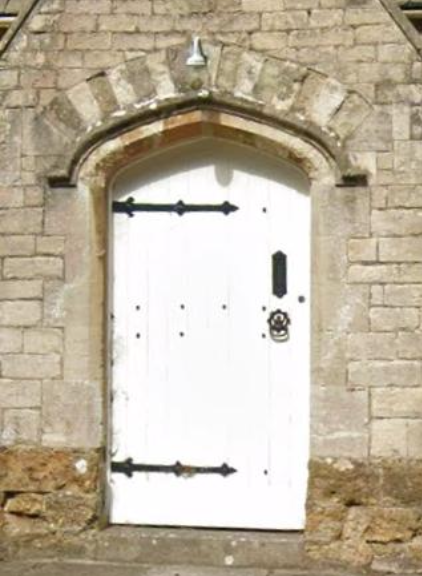
The original part of the house was also updated to a slightly more decorative Victorian style. The use of alternate marlstone and limestone blocks in the door and window surrounds is reminiscent of this door on the right, also in Stinchcombe. Do you recognise it? It’s the School House, built about 1839.
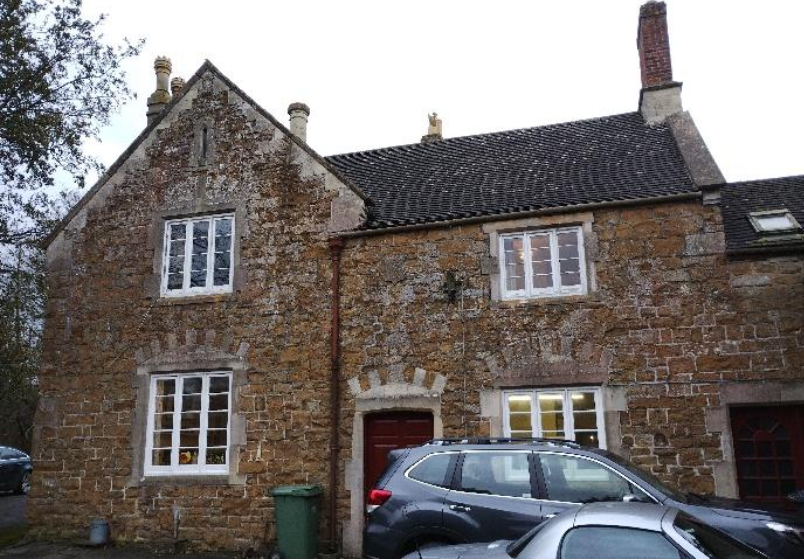
The cellar
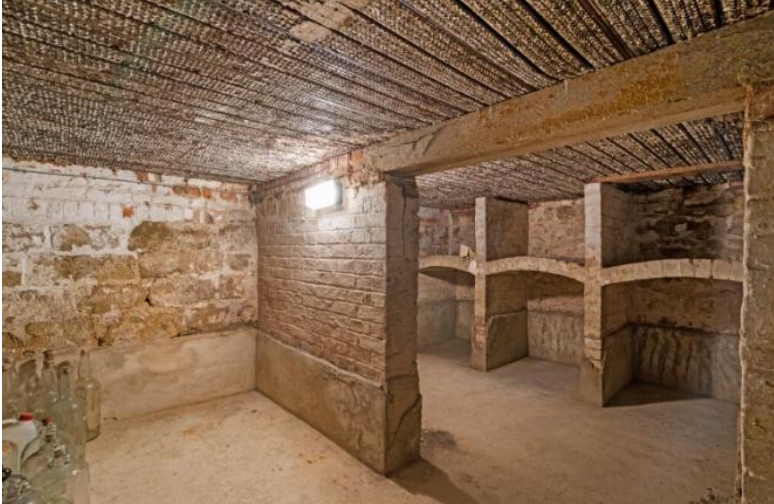
The cellar is situated beneath the main part of the house. It is interesting that its foundations are built from marlstone like that used for the original house. Is it a remnant of an earlier building or was a cheaper material used where it would not be on view?
The End of the Clingre Weights
Major Weight’s son and daughter both married and moved away in the years after his death. Louisa married the Rev. James Crabtree Sutcliffe, Curate of Stapleton in 1860. They moved to Falkirk, London and Norfolk with his career and after being widowed she ended up in Dorset. The Rev. Edward Weight married Harriet Clutterbuck in Manchester in 1863. They lived in Cheltenham and Bath and finally in Yorkshire.
Edward Parker Shute
Edward Parker Shute was living at Clingre House in the 1861 Census. He was a partner at the Vizard and Shute firm of solicitors in Dursley. Living with him were a farm bailiff and a housekeeper.
All of his farm stock was auctioned off on 12th March 1868. This included livestock, hay, a waggon and carts, farm tools, brewing and dairy equipment and 1,300 gallons of prime cider and perry. By the 1871 Census, he was with his brother in Devon and is listed as retired although only 49 years old. The 1881 Census shows him farming again, this time in Dorset.
The Long Family
William and Caroline Long were the next occupants of Clingre House, having previously lived at Clingre Farm. The 1871 Census says that they are farming 104 acres. Also listed is their 15-year old servant, Mary Ann Riddle, the Great Grandmother of Taits Hill Road resident Margaret Wannell. Samuel Long , who had taken over at Clingre Farm, was almost certainly William’s elder brother.
The earliest reference in the deeds of Clingre House is to a mortgage in 1875 between Edward Ricketts Long, James Ricketts and two different men both called Thomas Ricketts. At that time Clingre House was part of a larger holding that also included Hengaston Farm, The Old Toll House and Clingre Farm.
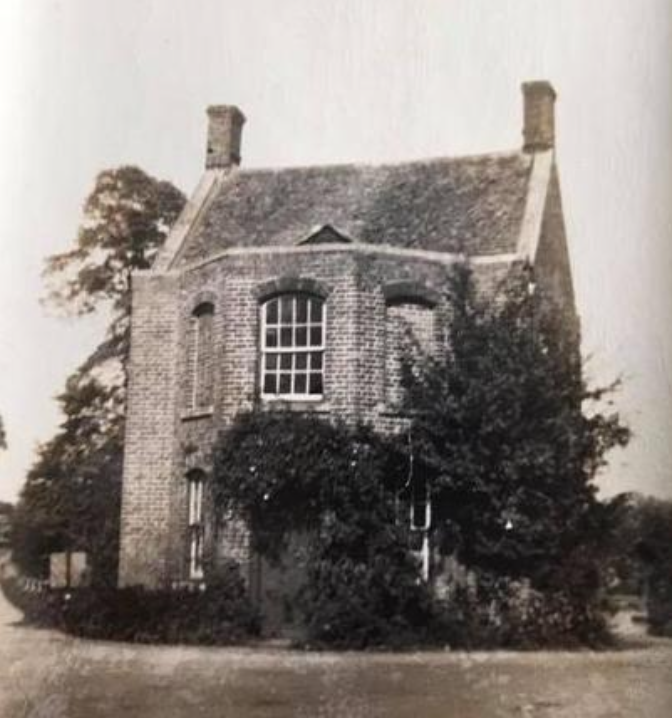
Edward Ricketts Long was a miller turned farmer who ended up administering the estate of hisaunt, the daughter of a wealthy landowner. Other trustees included Thomas Ricketts of Frocester and Thomas Ricketts of Eastington. Edward died at Hengaston Farm in 1899, leaving nearly £22,000, equivalent to around £1.3 million today.
It is not known how Edward Ricketts Long was connected to William and Caroline Long. They were still living at Clingre House in the 1881 Census but the acreage had decreased to 49 acre. By the 1891 Census, William was a widower, living at Lower Clingre Farm with his daughter.
The Jotchams
Edward Ricketts Long’s daughter, Eliza, received an annuity of her own even during her father’s lifetime. In 1886, she married Arthur Jotcham, a builder from Wotton-under-Edge. The Jotchams presumably acquired Clingre House on the death of Eliza’s father. They continued to live at Baden House in Wotton and rented out Clinge House. Some of the tenants were in residence a long time and are mentioned below.
Charles Gillander
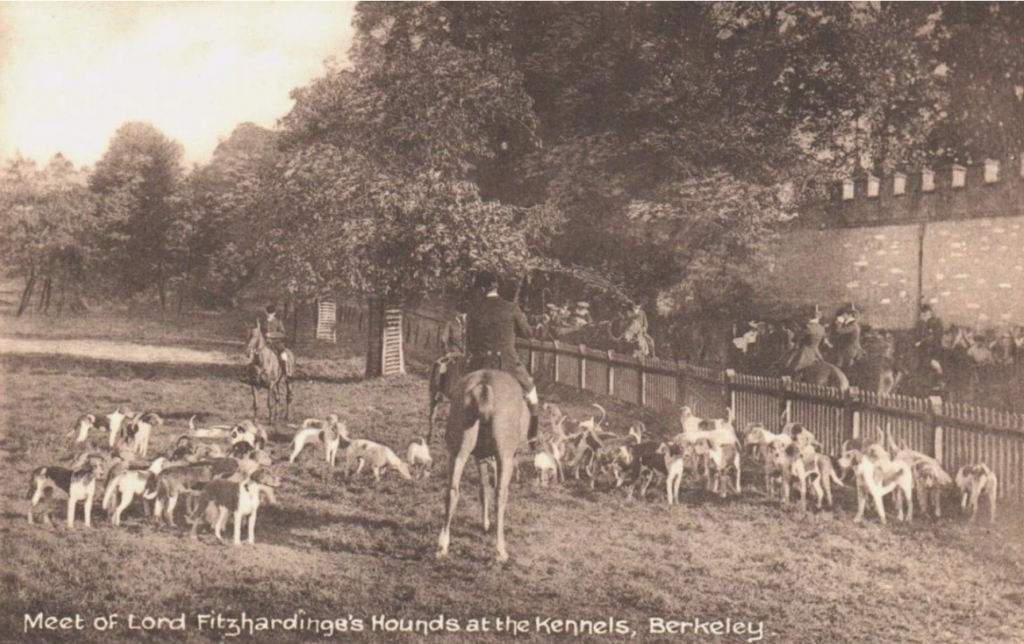
Charles Gillander moved into Clingre House no later than 1889, when his young son was baptised at St Cyr’s. He was a Scot working as a woods ranger and gamekeeper for the Berkeley Estate. There are frequent notices of Meets of Lord Fitzhardinge’s Hounds at Clingre House during his tenure. He also bred cattle and in 1901 his Channel Island heirer won a prize at the Berkeley Show.
Charles and his family were still at Clingre House in 1911. In the census of that year he was described as living on private means. Shortly afterwards he moved to Suffolk where he remained for the rest of his life.
Richard Holborow
Richard’s sister, Annie, was married to Robert Holborow, with whom they shared a surname. Robert was the licensee of the nearby Prince of Wales Hotel. It would have been a much busier place than now with Berkeley Road railway station and the cattle market still open. Richard and Annie’s father had been at various times a maltster, brewer and wine merchant, which may have been how they knew Robert.
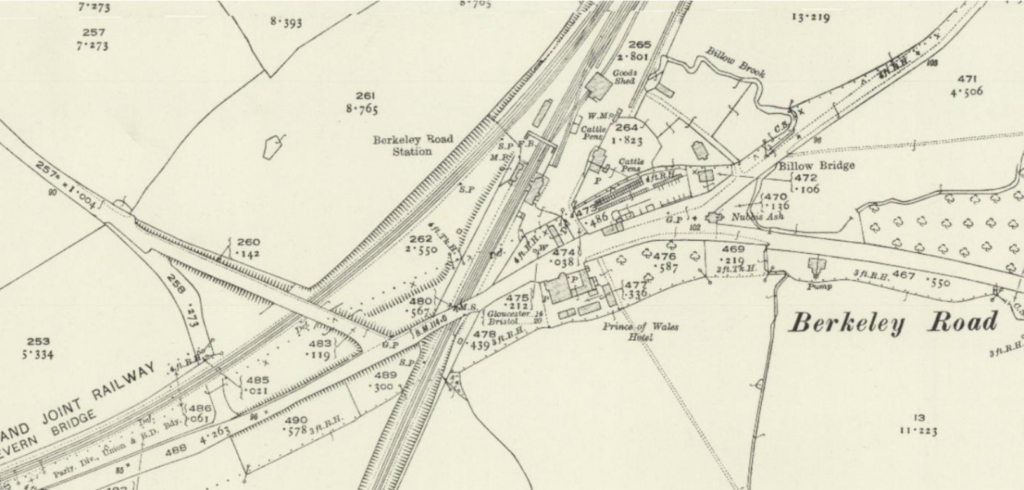
In the 1901 and 1911 Censuses, Richard was living at the hotel with Annie and Robert. By 1918 at the latest he had become the tenant of Clingre House. Robert died in 1911 and Annie later moved in with her brother, who never married.
Richard describes himself as a horse dealer with private means in the 1921 Census. His death notice reveals that he was a well-known figure in hunting and sporting circles. He was a former follower of the Berkeley Hounds, a member of the Berkeley Hunt Agricultural Society and a frequent competitor on show days. As a young man he had been a keen cricketer and played for the old Berkeley Club.
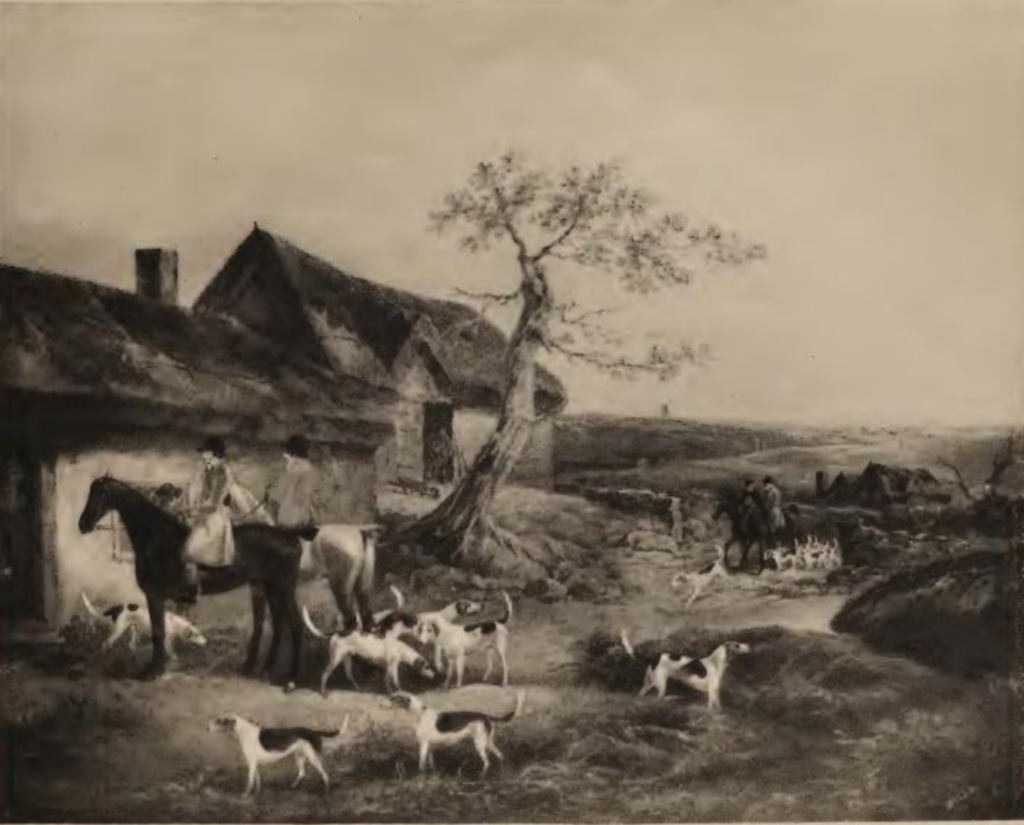
Soon after Richard’s death in 1935, his furniture was auctioned off. Items mentioned in the press include a Queen Anne mahogany bureau and chest of drawers, a Chippendale mirror, Georgian and Victorian silver, an old English bracket clock, a grandfather clock and various sporting pictures. One specific painting by is mentioned by name and I have managed to find an image in a later auction catalogue. It is by the prolific painter of rural scenes, George Morland. There is no way of knowing, but it is tempting to think that some of these items might have been at Clingre House since the days of the Weights.
Captain William F Eyre
The next tenant was also a hunting gentleman. Newspaper reports mention him attending a Berkeley Hunt Meet in 1935 and judging the jumping events at a local horse show in 1937. Despite the looming war, the Berkeley Hunt Agricultural Society’s 45th Annual Show took place in 1939. Captain Eyre organised a display by the Berkeley Hunt Pony Club designed to give the large crowd “a colourful spectacle of a Meet in the good old days”.
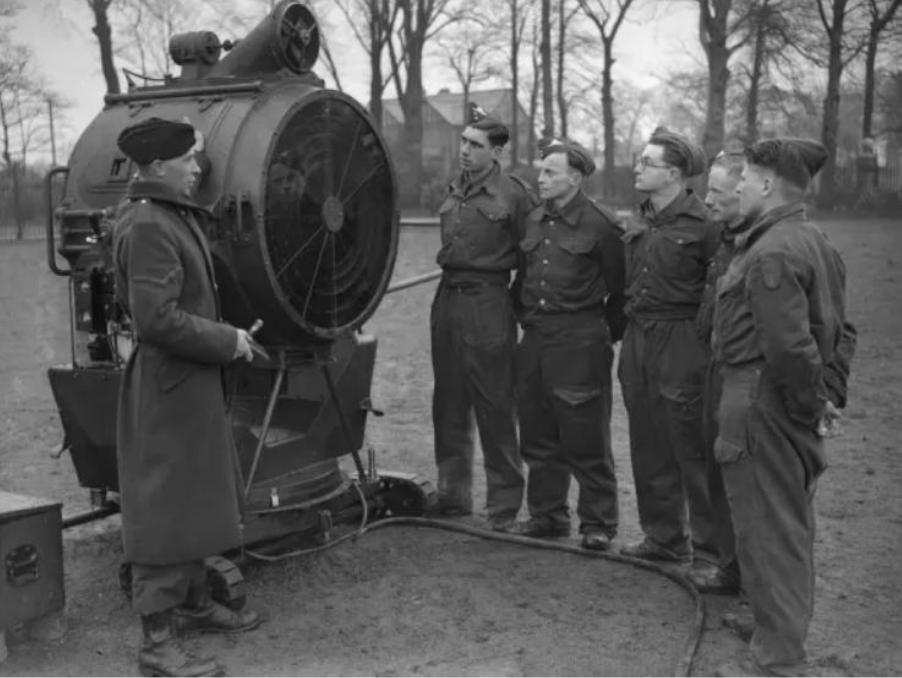
In the 1939 Register, compiled as the basis for wartime identity cards, Captain Eyre is described as an Army Captain in the Searchlight Regiment.
His wife Mary is an Air Raid Precautions (ARP) Warden. Also living at Clingre House are a groom (James Nicholson), maid (Priscilla Jepson), cook (Marianne Műller) and manservant (Paul Műller).
Sale of Clingre House in 1946
Bruton & Knowles auctioned the property at the Old Bell Hotel in Dursley on 1st June 1946. The sales particulars describe it as an attractive small residential property in the centre of the Berkeley (Hunt) Country and close to Stinchcombe Hill Golf Course. It is sold with garage, stabling and about 17 acres of pasture and orchards.
Brigadier Sir Francis Fetherston-Godley OBE
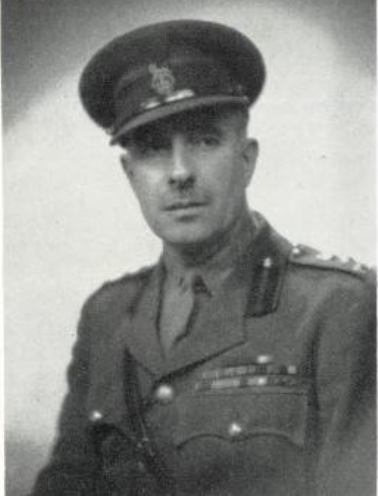
The buyer was Brigadier Sir Francis Fetherston-Godley. Although he lived at Clingre House for less than 2 years, he is interesting due to his part in world events both before and after. Previously, he had lived at Stinchcombe Hill House and is mentioned on the Stinchcombe Golf Club website https://www.stinchcombehillgolfclub.com/the- club/history/ as someone who helped restore the course after the war.
Sir Francis had served in France during WWI and back home he became a County Councillor, magistrate and Deputy Lieutenant of Gloucestershire. He is best known as Chairman of the British Legion. In that capacity, he led delegations to Europe trying to avert another war. He met many Heads of State, including on several occasions Hitler and Mussolini.
Fetherston-Godley’s intentions were good but, despite warnings at home, he was no match for the Nazi propaganda machine. Full details did not emerge until 2010, when a British Legion employee found the presentation photograph album commemorating the 1935 visit. There is also some contemporary film footage https://www.dailymotion.com/video/xfh9ek . In addition to meeting German ex-serviceman and laying wreaths at a war memorial Linden, the delegation visited a Hitler Youth holiday camp and had a guided tour of the Dachau concentration camp. Fetherston-Godley described conditions in Dachau as “very humane” and “quite attractive”.
There is a suggestion that the healthy inmates he saw were actually disguised SAS men.
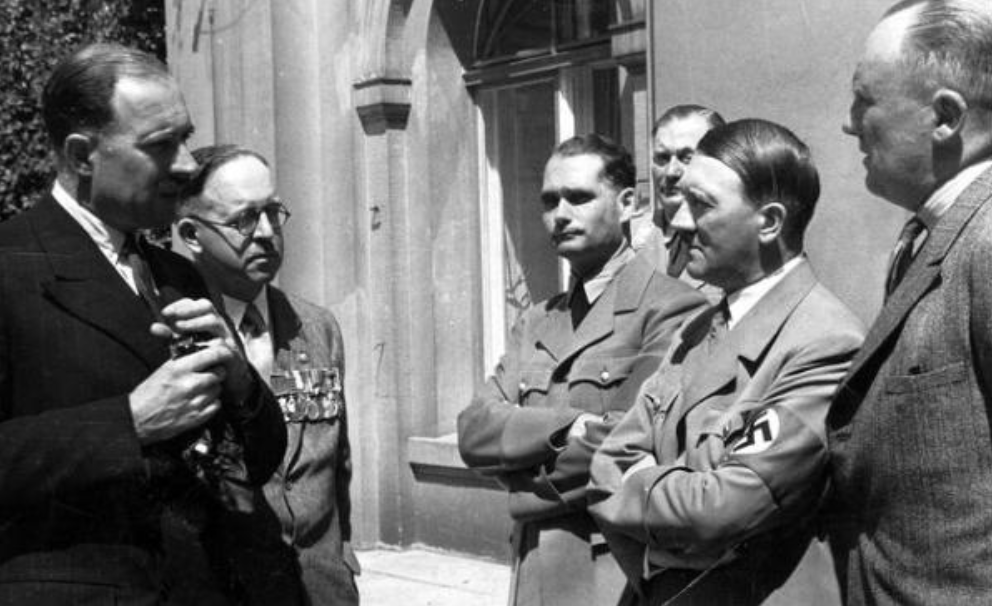
Shortly after his return Fetherston-Godley was knighted in the King’s Coronation Honours List.
As we now, war broke out and he was soon on active service in France again. He was mentioned in despatches and awarded the Chevalier, Ordre National de la Légion d’honneur and the Croix de Guerre.
After resigning as President and Chairman of the Gloucestershire Branch of the British Legion, Sir Francis emigrated to Kenya in 1947. Once again, he found himself in a situation that is now regarded as controversial. It was the period leading up to the Mau Mau anti-colonial rebellion, marked by an increase in acts of resistance. Fetherston-Godley was soon asked to help set up an armed force to help keep the peace. He became a Provincial Commandant in the Kenya Police Reserve between 1950 and 1954. Later he was awarded the Colonial Police Medal for his services. He would have seen the first years of the full-blown Mau Mau Emergency and the
British counter-insurgency. I have not been able to find out anything about his personal involvement. Sir Francis ended his days in Jersey, where he lived until 1978.
The Aylwards
The Aylward family lived at Clingre House from 1948 to 1964. The family had been wine, spirit and beer merchants in Hampshire since the mid-19th century. They had their headquarters in Winchester at 13 Jewry Street and also had premises in Southampton both on the High Street and on the Town Quay. The old postcard below shows part of the Southampton shop. By coincidence it is next to Holy Rood Church where Daniel Weight married Elizabeth Morris in 1781.
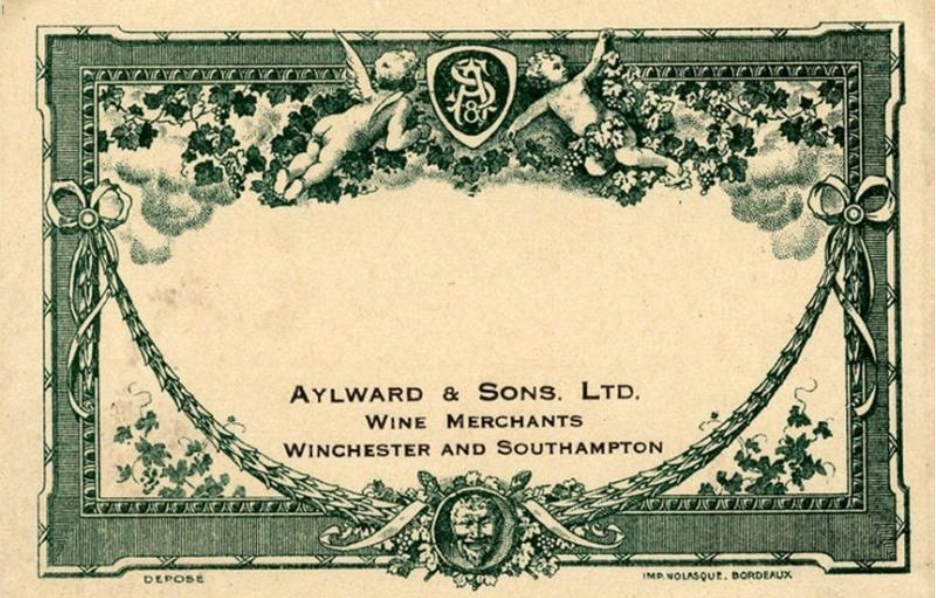
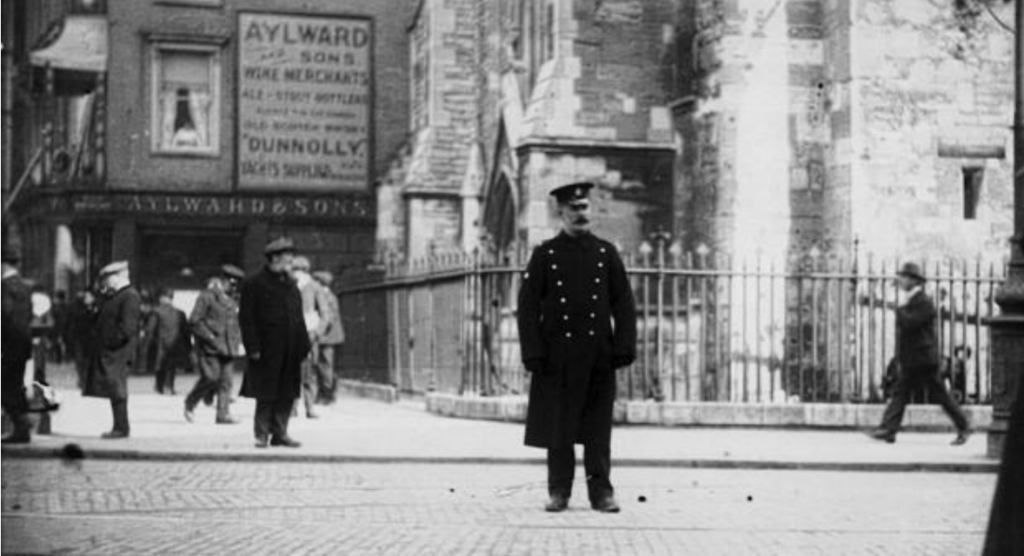
Edward Burcher Aylward was in his mid-60s when he moved to Clingre House with his wife Beryl. Presumably he was retiring from business or at least taking a less active role. He may have turned the cellar into a wine cellar as that feature was not previously mentioned.
Their son James Holynworth Aylward moved in with them and after his marriage in 1956 they were joined by his young wife Lesley. I think James and Lesley had two daughters at some stage – perhaps someone can remember if there were young children at Clingre House in the late 1950s to early 1960s? James and Lesley had moved to Devon by 1963 and within a few years Edward and Vera had sold the house.
The Arundells and the Whitneys
Ruth and John Arundell bought Clingre House in 1967 and raised their family there. Maintaining an historic building is always a challenge and eventually the roof needed retiling. Fortunately for the Arundells, Stroud District Council overlooked the fact that the house was listed because they mistakenly thought it was in Cam rather than Stinchcombe. The project would have been unaffordable if cheaper, modern tiles had not been an option.
After John died in 1998, Ruth remained in the house. Eventually, she needed extra help, so her married daughter Sue Whitney returned to her former home with husband Gerry and their children. She had many happy memories of growing up there.
Ruth died in 2023, leaving Sue and Gerry to embark on the long process of getting the property ready for sale. They kindly showed me around with Andrew Weight in December 2024 while clearance was still in full swing. When I visited again with Richard Chidlaw in November 2025, the house was under offer and cleared apart from items to be sold at auction. The Whitneys had already moved out and settled in their new home.
The next chapter
Whilst I have yet to meet the new owners of Clingre House, I wish them every happiness there. I believe that they are quite young people, so with luck they will see the house into its 400th year.